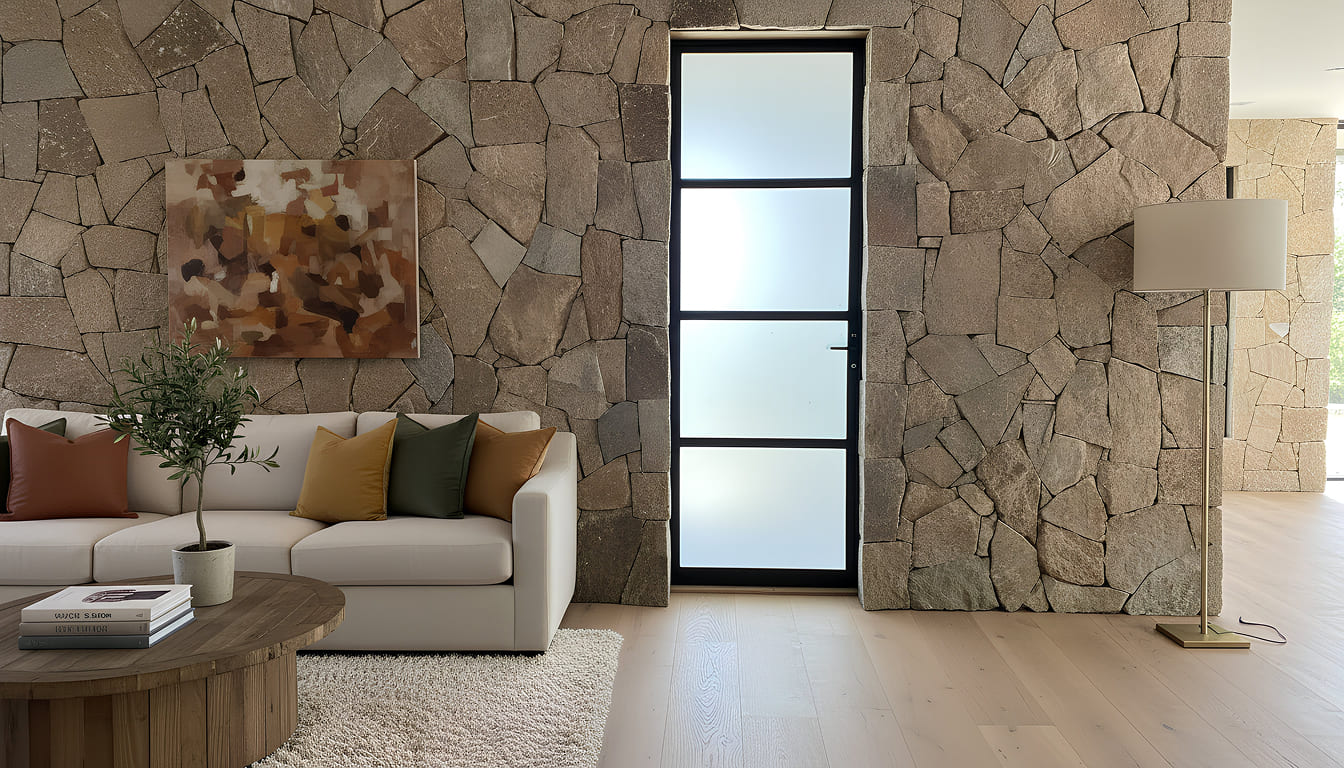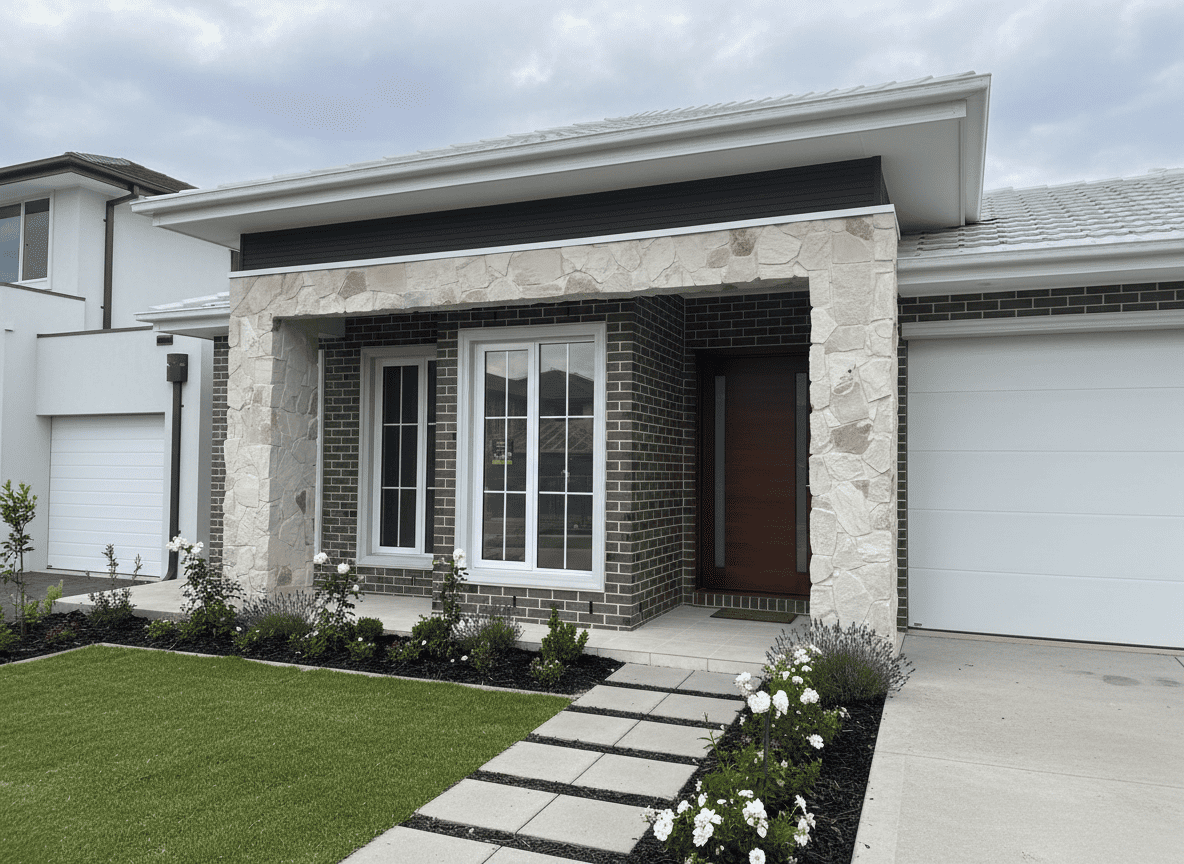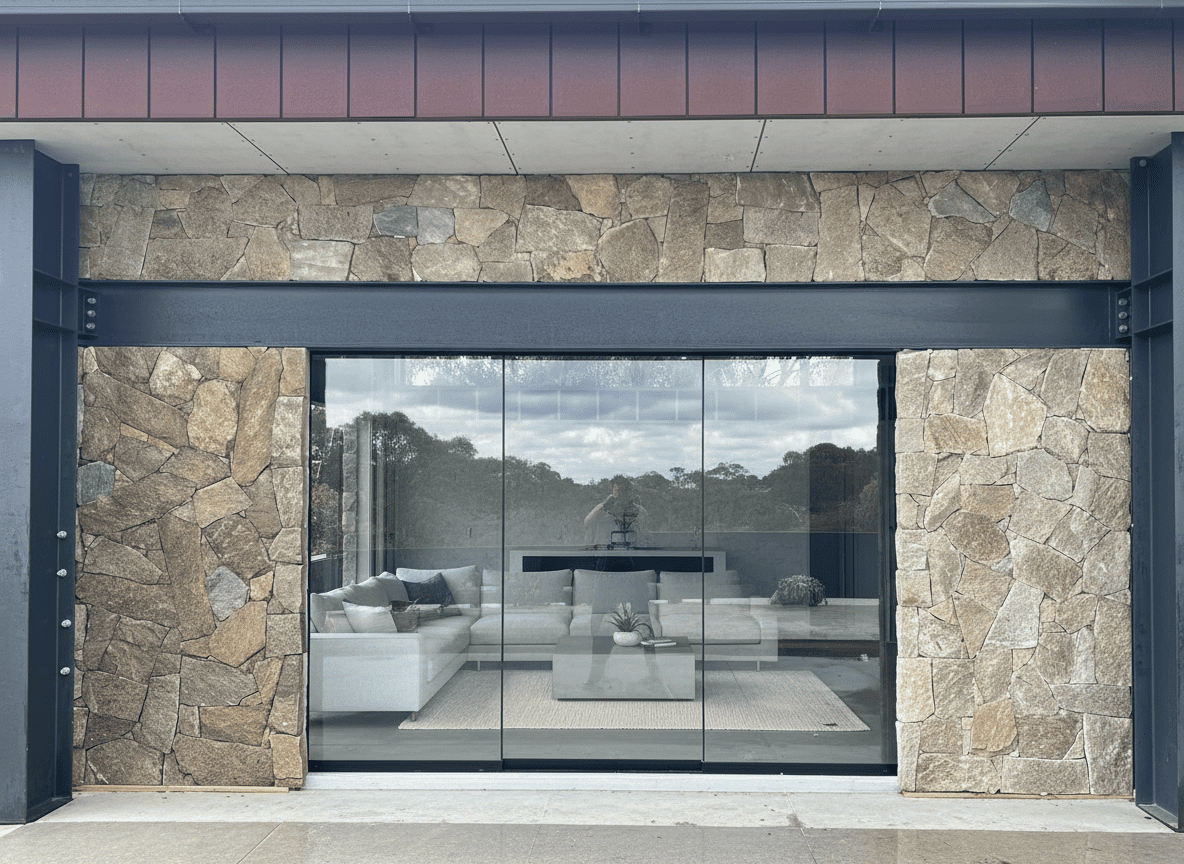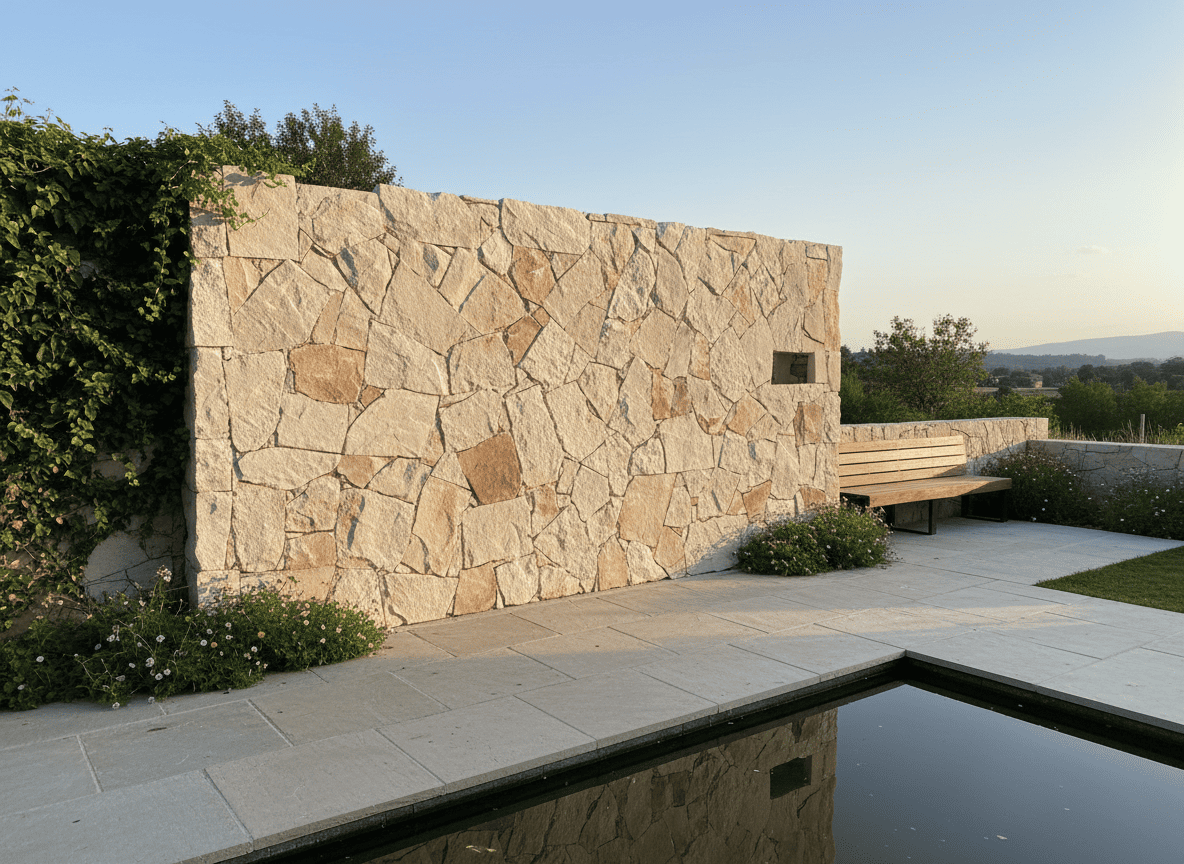
Natural stone cladding requires minimal maintenance. Regular cleaning and occasional resealing keep your stone looking good for decades. This guide covers stone cladding maintenance for Australian conditions.
Routine Cleaning
Clean your stone cladding once or twice per year. For most situations, water and a soft brush are enough.
- Hose down the wall to remove loose dust and debris
- Scrub with a soft bristle brush and clean water
- For stubborn dirt, add a pH-neutral stone cleaner
- Rinse thoroughly and let dry
Avoid high-pressure washers on sandstone. The pressure removes the natural surface texture. Granite and quartz handle moderate pressure.
Dealing with Stains
Oil and grease: Apply a poultice of baking soda and water. Leave overnight. Brush off and rinse.
Mould and algae: Apply a diluted bleach solution (1:10 with water). Scrub gently. Rinse thoroughly.
Rust: Use a commercial rust remover for stone. Test in an hidden area first.
Efflorescence: The white salt deposits usually fade on their own. Brush off dry or wash with water.
Sealing
Sealing protects stone from staining and makes cleaning easier. Apply sealer after installation and reapply every 3 to 5 years.
Sandstone: Sealing recommended. Sandstone is more porous and absorbs stains without protection.
Granite: Sealing optional. Granite has low porosity and resists staining naturally.
Quartz: Sealing optional. Dense structure provides natural stain resistance.
What Not to Do
- Do not use acidic cleaners (vinegar, citrus, bathroom cleaners)
- Do not use abrasive scourers or steel wool
- Do not use high-pressure washers on sandstone
- Do not ignore damaged grout joints. Repair promptly
Long-Term Care
Inspect your stone annually. Check for loose pieces, cracked grout, and drainage issues. Address problems early to prevent larger repairs. With proper care, natural stone cladding lasts 50 years or more.