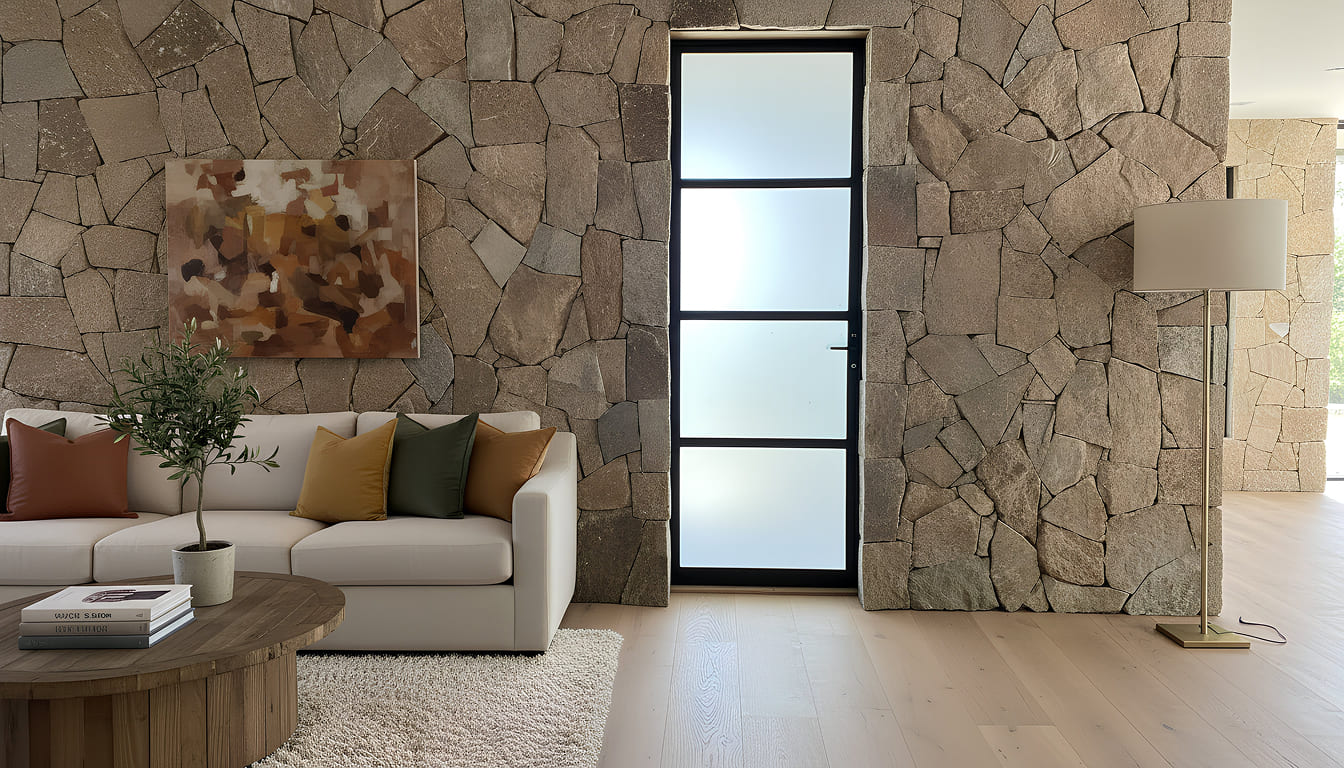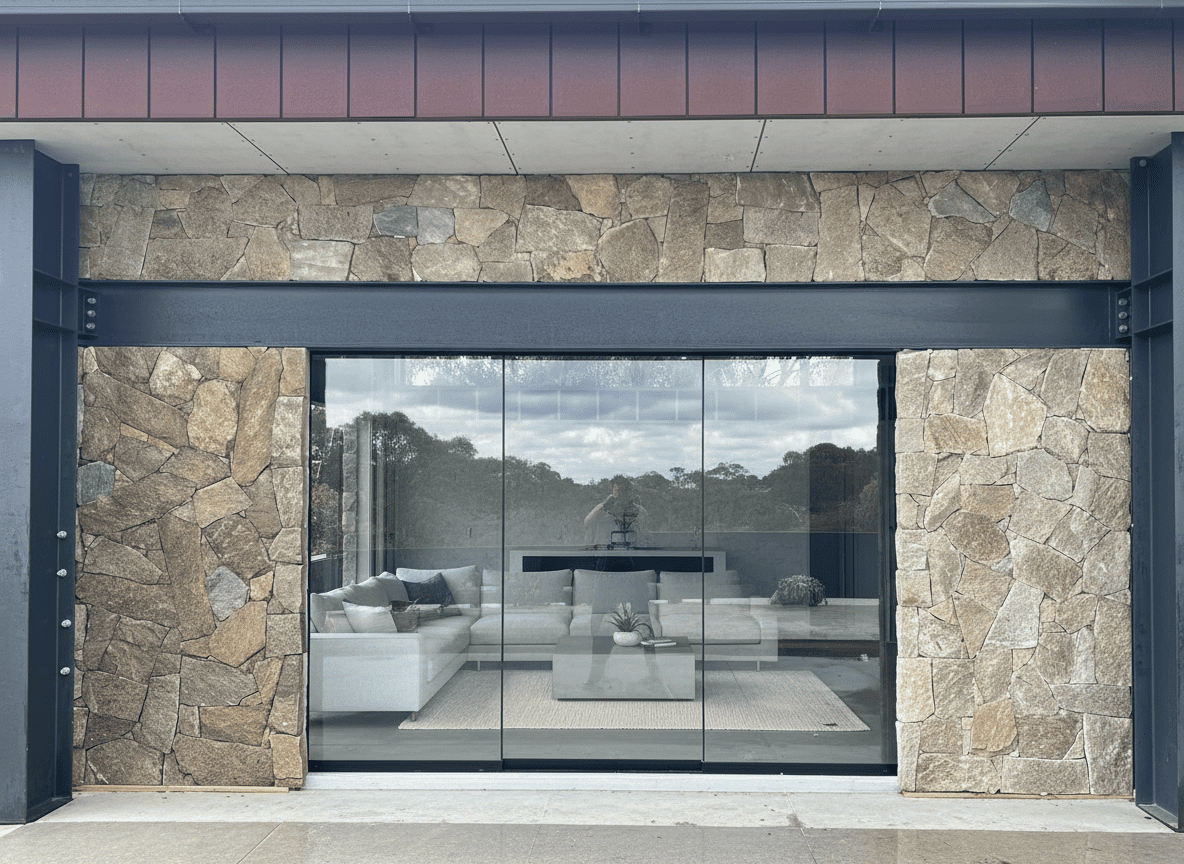
A stone fireplace surround creates a focal point in any room. Natural stone adds texture and warmth that other materials struggle to match. This guide helps you choose the right stone for your fireplace project.
Heat and Stone
Natural stone handles heat well. Sandstone, granite, and quartz are all suitable for fireplace surrounds. The stone sits outside the firebox and does not experience direct flame contact. Radiant heat from the fire will not damage properly installed stone cladding.
One consideration: leave a small gap between the stone and the firebox edge. Your fireplace installer will advise on clearances. Most gas and wood fireplaces need 50mm to 100mm clearance from combustible materials to the firebox opening.
Choosing Your Stone Type
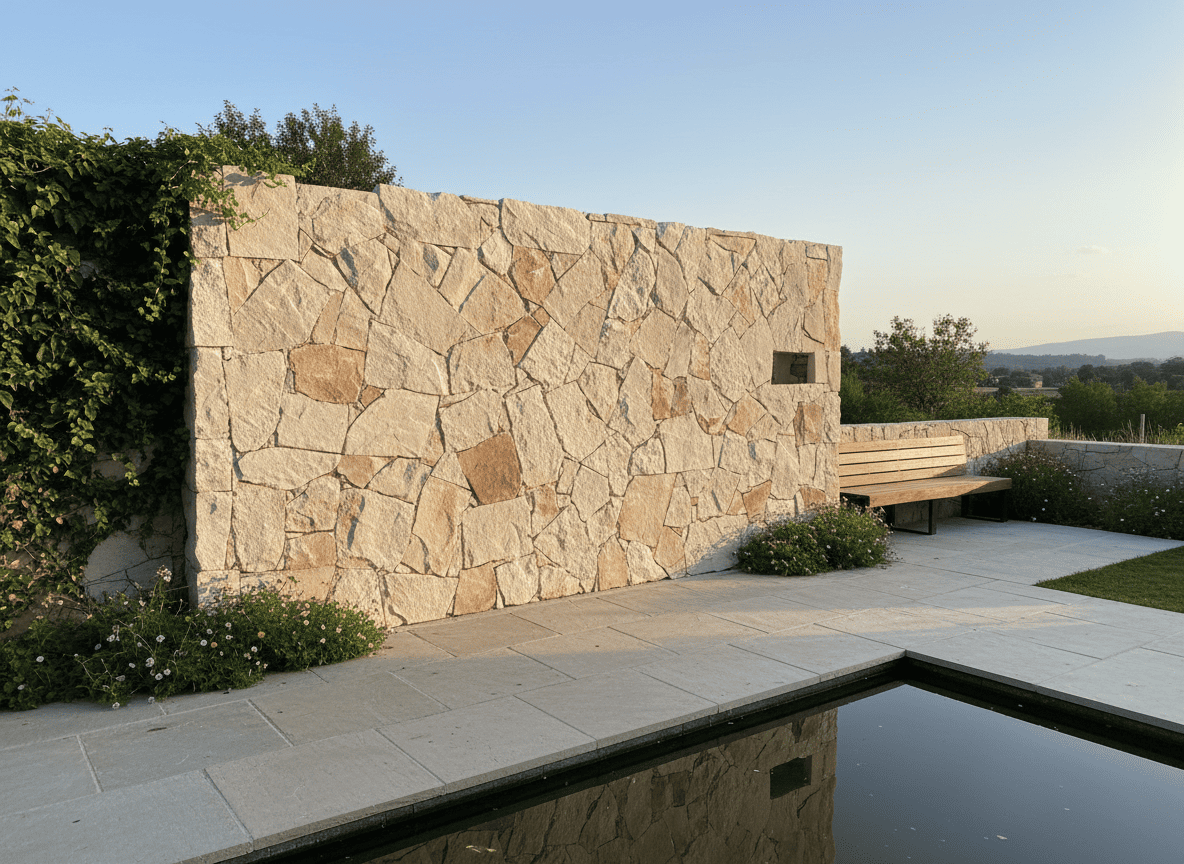
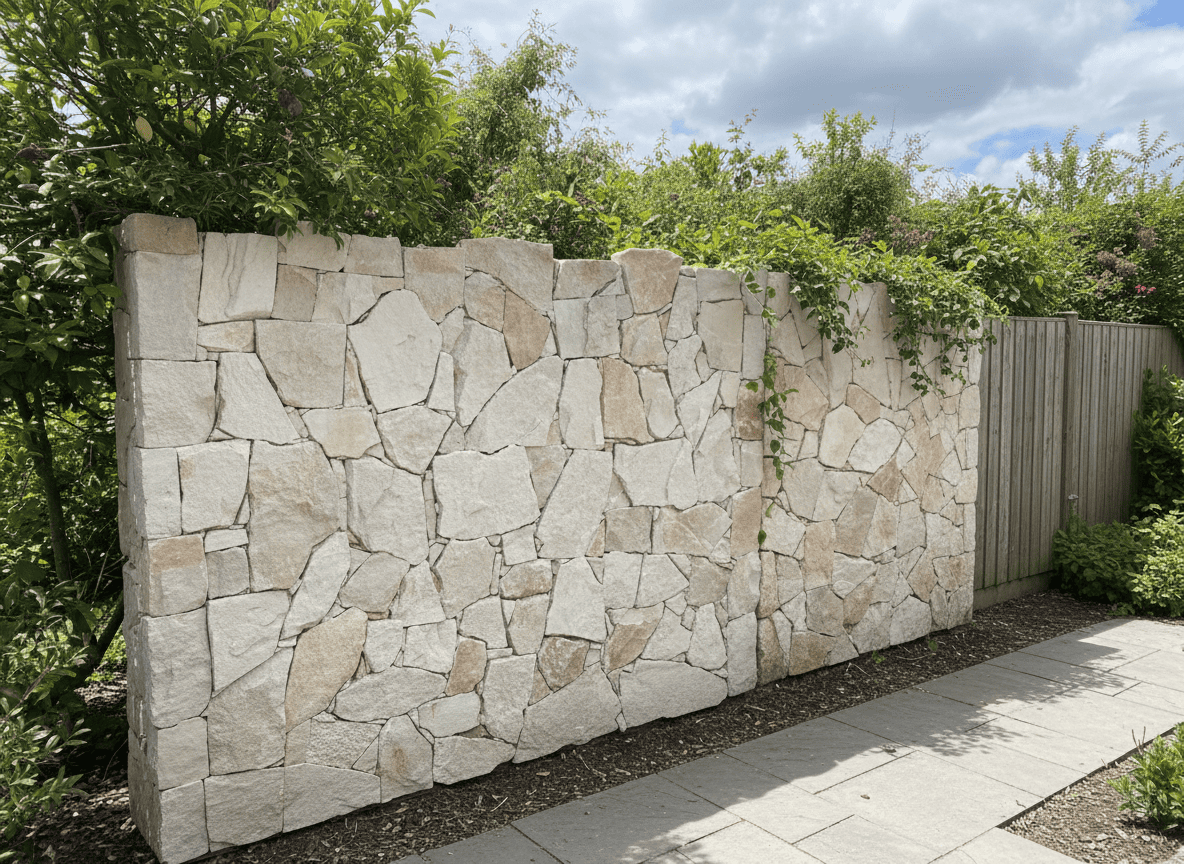
Sandstone suits traditional and coastal interiors. The warm tones complement timber floors and neutral furnishings. Monterey sandstone with its white and brown colouring creates a relaxed, beachy feel. Coastal Drift with beige and sand tones works in classic settings.
Granite makes a bold statement. The charcoal and grey tones of Kimberley granite suit modern and industrial interiors. Granite is harder than sandstone and resists scratches and chips.
Quartz offers a contemporary look. Bass Coast quartz with its grey and silver tones creates a clean, architectural feel. The linear stacking pattern suits minimalist designs.
Pattern Options
Freeform: The irregular shapes create visual interest and a handcrafted appearance. Freeform patterns draw the eye and make the fireplace a conversation piece.
Ashlar: The rectangular shapes and clean lines create a structured appearance. Ashlar patterns suit contemporary homes where you want texture without visual chaos.
Installation Tips for Fireplaces
- Start at the bottom and work up
- Use flexible adhesive rated for heat exposure
- Plan your layout before you start. Dry lay pieces on the floor
- Use pre-made corner pieces for the mantle edge and any external corners
- Maintain required clearances from the firebox
- Seal the stone after installation to protect against soot and dust
How Much Stone Do You Need?
Measure the height and width of your fireplace surround in metres. Multiply to get square metres. Add 10% for cuts and waste. Count the lineal metres of external corners and mantle edges where you need corner pieces.
A typical single-sided fireplace surround uses 3 to 5 square metres of walling and 2 to 4 lineal metres of corners.
Get Started
Order free samples to see the stone in your home. Hold samples next to your flooring and wall colours. View them in different lighting conditions. This helps you make a confident decision.